Homemade Cleaning Products: The Right Approach
Turning to natural cleaning products is a perfectly understandable step when trying to create a healthier home. However, replacing industrial chemicals with improvised DIY solutions requires careful attention. Raw ingredients are still bound by the basic laws of chemistry. Depending on the ratios and combinations used, their physical and molecular interactions can vary wildly. While these homemade mixtures might be harmless to your health, they can also completely cancel out any expected cleaning power. In more serious scenarios, they can even produce unwanted, dangerous compounds. So, while making your own cleaners stems from the best of preventative intentions, one fundamental rule bears repeating: "natural" does not automatically mean harmless.
Key Takeaways
- Neutralization: Mixing white vinegar and baking soda cancels out their respective cleaning properties.
- Toxic gases: Mixing bleach with an acid (like vinegar) releases chlorine, a dangerous and irritating gas.
- Explosion risk: Trapping a reactive mixture (baking soda and vinegar) in a sealed spray bottle can cause it to burst under pressure.
- Ventilation: The thermal airtightness of modern homes makes it essential to systematically ventilate the space during and after cleaning.
Why do commercial cleaning products pollute indoor air?
Faced with growing concerns about indoor air quality, consumers are increasingly favoring homemade alternatives. Everyday cleaning products can contain a variety of substances that are harmful, corrosive, or toxic to the body.
The emission and persistence of Volatile Organic Compounds (VOCs)
Everyday staples like detergents, stain removers, disinfectants, and air fresheners share a common trait: they emit volatile organic compounds, commonly known as VOCs. These airborne molecules don't just magically dissipate once you finish scrubbing. They linger in the indoor air for several hours, continuously altering the chemical makeup of your home environment.Well-documented risks
The quest for simpler alternatives makes perfect sense when you examine the exact nature of some of these compounds. Specific VOCs are frequently found in aerosols, detergents, and odor-masking products like candles and incense sticks. Some of these compounds, such as formaldehyde and benzene, are known carcinogens. Toluene is another toxic VOC commonly lurking in these products. The presence of these substances clearly explains why households are actively trying to limit the pollutants they bring into their living spaces.Can you mix white vinegar and baking soda?
One of the cornerstones of alternative household cleaning is often based on a misunderstanding of basic chemistry. As the consumer portal Consoglobe points out, just because an ingredient is labeled "natural" doesn't mean it's harmless. Incredibly common substances like baking soda, rubbing alcohol, or hydrogen peroxide can pose tangible dangers if mixed improperly.
The principle of chemical neutralization
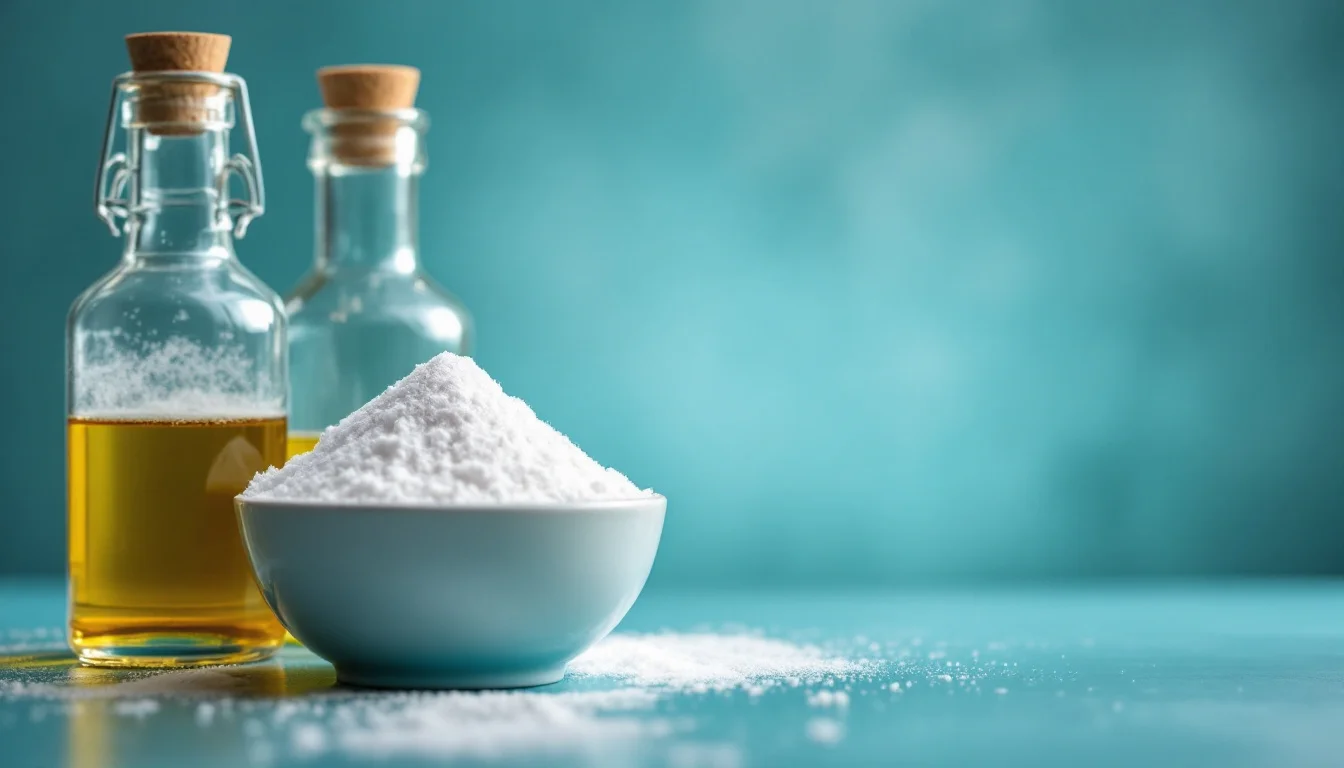
Combining baking soda and white vinegar is a perfect example of this phenomenon. Chemically speaking, vinegar is an aqueous solution of acetic acid, while baking soda acts as an alkaline base. When combined, they trigger a spectacular acid-base reaction. This fizzing actually neutralizes the specific properties of each ingredient: once the reaction is over, the mixture essentially becomes sodium acetate in water. Consequently, its cleaning or degreasing power is often wildly overestimated. Used separately, white vinegar is an effective descaler and baking soda acts as a gentle abrasive, but mixing them simply cancels out these benefits.The risk of explosion from overpressure
Beyond being relatively useless for scrubbing once the fizzing stops, this mixture poses a purely physical risk. Combining baking soda and white vinegar isn't dangerous as long as the container is left open. The hazard only arises if the mixture is sealed. The gas released by the reaction builds up rapidly, creating intense pressure. In a closed bottle or sealed spray container, this pressure can easily cause the vessel to explode.Which cleaning product mixtures should you avoid?
The basic ingredients used in alternative cleaning remain full-fledged chemical reactants. When combined haphazardly, these molecules can synthesize new gaseous or liquid compounds with highly irritating or corrosive properties. Here is a breakdown of the main interactions you should avoid in your home.
Bleach is notoriously unstable when it comes into contact with other agents. Mixing white vinegar (an acid) with bleach (which contains chlorine) releases chlorine gas—a toxic substance that causes eye irritation and lung damage when inhaled. Another critical combo to avoid is bleach and ammonia, which generates chloramines: toxic gases that cause severe respiratory distress.
Even combining supposedly "gentle" components can create harmful substances. Mixing white vinegar and hydrogen peroxide forms peracetic acid, a highly corrosive liquid. Finally, combining bleach and rubbing alcohol produces chloroform and other toxic compounds—substances capable of causing severe damage to the nervous system and vital organs.
The following table outlines the main dangerous mixtures, the exact compound they synthesize, and the physiological impact they have:
| Base Reactants Mixed | Compound Synthesized | Identified Physiological Impact |
|---|---|---|
| White Vinegar + Bleach | Chlorine gas (toxic gas) | Eye irritation, coughing, chest pain, severe lung damage |
| Bleach + Ammonia | Chloramines (toxic gases) | Burns to mucous membranes, respiratory distress |
| White Vinegar + Hydrogen Peroxide | Peracetic acid (corrosive liquid) | Severe skin and eye irritation, respiratory burns |
| Bleach + Rubbing Alcohol | Chloroform and other toxic compounds | Damage to the nervous system, liver, kidneys, and lungs |
Why does the insulation in modern homes increase toxic risks?
The potential severity of accidental chemical interactions is heavily exacerbated by the physical characteristics of newer buildings today. As highlighted in a publication by Idéal France on indoor air quality, modern homes are significantly better insulated than they used to be. The primary goal of this structural design is to limit energy loss. However, this seamless insulation comes with a direct side effect: it just as effectively traps the pollutants emitted by cleaning products indoors.
Contemporary housing relies on airtightness. If a resident generates an unwanted gas from an improper chemical mix or uses highly emissive commercial products (like aerosols or air fresheners), those airborne molecules no longer simply drift away through the natural drafts of older buildings. The living space essentially turns into a containment zone where pollutants and volatile organic compounds accumulate, making natural or mechanical ventilation absolutely essential while cleaning.
Frequently Asked Questions (FAQ): Preventing Household Accidents
Can I use two different chemical drain cleaners back-to-back?
It is strongly advised against using different commercial drain cleaners one after the other. Mixing two chemical drain uncloggers with different formulas can trigger a highly violent chemical reaction. These products are generally made with caustic soda or powerful acids. When they meet in a confined space, they produce an instantaneous release of heat, which can even lead to an explosion inside your pipes. Relying on mechanical action or calling a professional remains the only truly safe solution.Should I ventilate the room during and after cleaning?
Yes. To purge an airtight home and limit the concentration of pollutants, the golden rule is ventilation. The pollutants and VOCs emitted by cleaners accumulate in the air. Therefore, it is crucial to thoroughly air out rooms both during and after your cleaning sessions.Can you mix vinegar and baking soda in a sealed bottle?
No. While a mixture of white vinegar and baking soda isn't toxic in open air, danger strikes if it is prepared and trapped in a sealed container. The chemical reaction releases a gas that quickly builds up and creates extreme pressure, posing a serious risk of exploding the bottle or spray dispenser.Conclusion
All too often, the effort to create a healthier home simply leads to swapping a hoard of industrial chemical bottles for a hoard of raw ingredients. However, optimizing for a safe and healthy cleaning routine is fundamentally about subtraction. Embracing true preventative hygiene means drastically reducing the number of substances you use, prioritizing the mechanical action of microfiber cloths or simple dilution with water. By simplifying your cleaning processes, you reduce the risks of hazardous chemical interactions and help preserve the quality of your indoor air.