Allergies: Purifying the Air
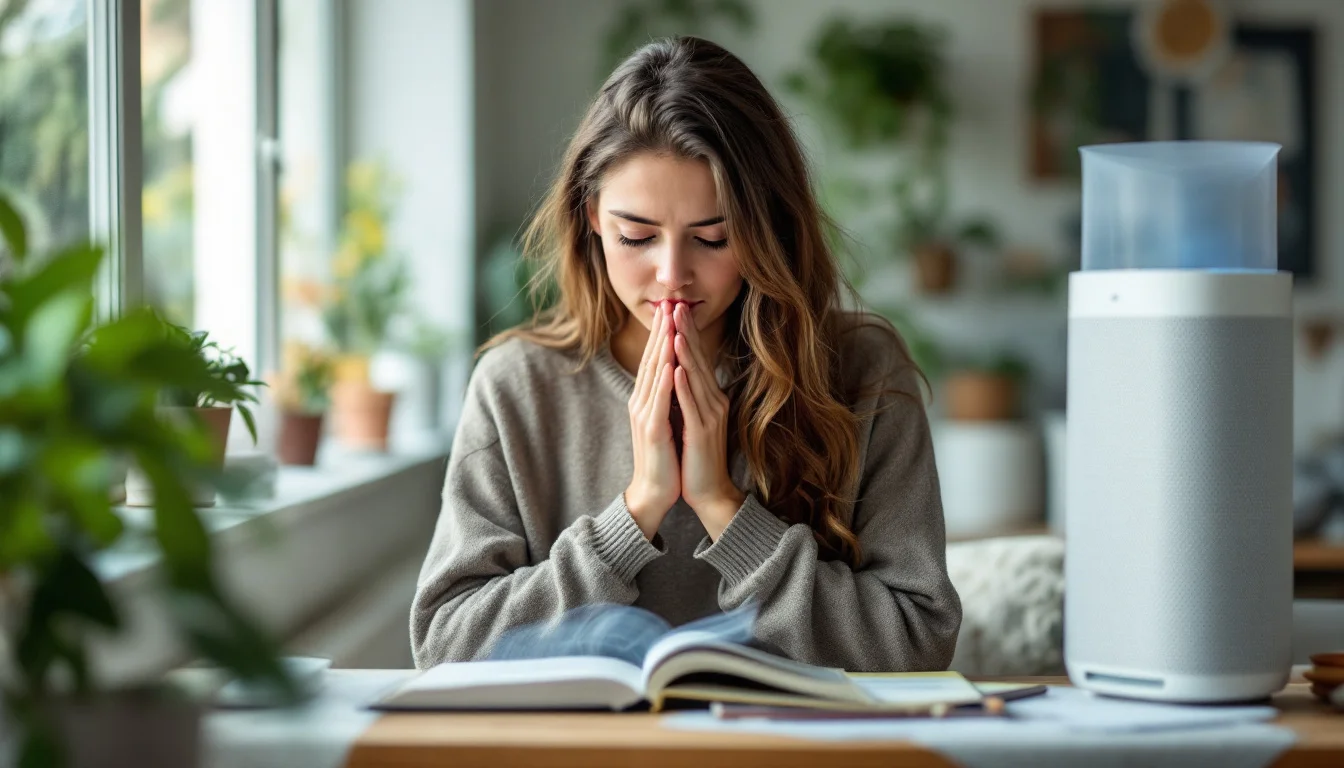
The idea that simply plugging a machine into the middle of the living room will create an impenetrable shield against pollen is pure magical thinking. When it comes to seasonal allergies, the technological promise is undeniably appealing in its simplicity: a standalone device that cleans the air for us. In reality, managing indoor air quality relies on a complex, dynamic balance.
Allergenic particles travel on air currents, settle on fabrics, and are kicked back into the air at the slightest movement. Approaching this issue strictly through the lens of equipment inevitably leads to disappointment. An air purifier is never the starting point for a healthy home. Instead, it is the final step in a comprehensive approach designed to limit allergens from entering, control where they settle, and filter whatever remains airborne. Understanding this systemic approach allows you to move beyond merely buying a gadget to truly mastering your home environment.
Key Takeaways
- Variable efficiency: Optimal performance measured in an isolated test chamber does not accurately reflect the airflow dynamics of a bustling household.
- A complementary role: The machine should be the final touch in your strategy, used only after rigorously applying proper ventilation and surface-cleaning routines.
- Choosing the right technology: Some mechanisms, like ionization, while highly effective, require additional manual cleaning to be truly practical.
- Targeting the right space: The device must be properly sized for the enclosed room it is treating; otherwise, its impact will be so diluted it becomes unnoticeable.
1. Is an Air Purifier Enough to Combat Pollen?
The air treatment market is marked by a stark contradiction between the technical data published by testing labs and the reservations expressed by healthcare professionals. While indoor air is often considered more polluted than outdoor air when it comes to chemical pollutants, the reverse is true for pollen, which generally sees much higher concentrations outside. Understanding the root of this discrepancy is essential for setting realistic expectations.
Spectacular Theoretical Performance
From an engineering standpoint, the capabilities of these devices are not in question. The French consumer magazine UFC-Que Choisir highlighted an in-depth test conducted by the German consumer organization Stiftung Warentest. The evaluation showed that the performance of filter-based air purifiers varied wildly by model; some captured nearly all pollen grains, while others fell woefully short.
However, the testing protocol itself warrants a closer look. Measurements were taken in a closed 16 m² room—a small, highly controlled volume. Moreover, the experiment involved massive concentrations, injecting 2 million pollen particles per cubic meter of air. While these conditions simulate extreme saturation in a confined space, they are far removed from the constant fluctuations of a real-life living environment.
Medical Professionals Urge Caution
Faced with these impressive figures, medical literature adopts a much more nuanced stance. According to Dr. Jean-Marie Nguyen, an allergist at Bicêtre Hospital and member of the French Asthma and Allergies Association, who was interviewed by Santé Magazine, it remains difficult to draw definitive conclusions about the clinical usefulness of an air purifier against pollen.
Current studies on the subject remain contradictory regarding the actual reduction of symptoms in patients. While there is absolutely no medical risk in using this type of device at home, one strict condition applies: you must never rely solely on the machine. Pollen is not a static gas; it is a heavy dust that falls and clings to surfaces. Consequently, much of it escapes the suction zone of an isolated purifier.
2. HEPA Filter or Ionizer: Which Is Better for Pollen?
The type of technology inside the device dictates exactly how pollen is physically neutralized. It is crucial to distinguish between systems that permanently capture matter and those that simply alter its trajectory around the room.
The Gold Standard: Mechanical Capture
When it comes to fighting pollen, the technical benchmark documented by Santé Magazine remains the HEPA (High Efficiency Particulate Air) filter. This is the most common type of filter used industry-wide for domestic air purifiers. Its specific design consists of a dense, randomly woven mesh of fibers.
This physical sieve is explicitly designed to trap fine particles and airborne allergens. According to certain commercial claims—such as those from manufacturer Leitz/TruSens—some filters are touted as catching ultrafine particles well below standard HEPA requirements. Once drawn in, the allergen remains permanently trapped within the folds of the material. This method definitively reduces the pollutant load in the ambient air, provided the filter isn't saturated.
The Pitfall of Allergen Displacement
Other technologies tackle the problem from an electrical angle. An ionizing purifier works by emitting negative ions. These ions charge and clump together the airborne particles in the room.
As Santé Magazine points out, this process weighs the pollen down. While some of this clumped dust is sucked into the machine, a significant portion falls directly onto the floor and surrounding furniture. Using ionization essentially shifts the allergenic load from the air to your surfaces. The user is then obligated to regularly clean up these deposits with a HEPA-equipped vacuum cleaner. Without this extra cleaning step, the pollen simply goes right back into the air the moment someone walks by.
Quick Comparison: HEPA vs. Ionization
- Capture Method: Physical retention in the material (HEPA) vs. Electrical clumping (Ionization).
- Allergen Destination: Trapped in the filter (HEPA) vs. Settles on surfaces (Ionization).
- Maintenance: Periodic replacement of consumables (HEPA) vs. Frequent vacuuming of floors and furniture (Ionization).
3. Steps for a Successful Setup
Installing a filtration machine does not exempt you from using common sense. It requires establishing a behavioral routine based on the combined recommendations of housing and healthcare professionals.
Step 1: Thorough Air Renewal
The first action of the day should be flushing out the stale air that accumulated overnight, despite the presence of pollen outside. It is recommended to air out your home daily for at least 5 minutes early in the morning. This short, intense burst of ventilation replenishes the oxygen and regulates humidity without immediately saturating your walls with allergens.
Step 2: Daytime Lockdown
Managing open windows is crucial when the pollen count is at its peak (especially on dry, windy days, which can be monitored via alerts from local allergy and pollen monitoring networks). The anti-allergy measures outlined by Santé Magazine require keeping windows closed during the day. The strategy is to air out the home only early in the morning and later in the evening. During these ventilation windows, it is advisable to create strong drafts to sweep out the room's volume, then close everything back up. Above all, avoid sleeping with the window open.
Step 3: Surface Hygiene
The air cannot be sanitized if the floor is acting as a particle reservoir. Before even considering running an air purifier, it is imperative to regularly dust and vacuum everywhere. Additionally, you must avoid smoking indoors, as this instantly degrades the indoor air quality.
Step 4: Activating the Filtration
The machine only becomes genuinely useful once these first three steps have been followed. Placed in an environment where the windows are now shut and surfaces have been cleared of fresh deposits, the purifier can focus on its primary task: filtering out the residual fine particles kept airborne by evening human activity.
4. Where and in Which Room Should You Place Your Purifier?
The spatial dimension is the main reason filtration strategies fail. An inappropriate room volume dilutes the performance of any motor, making its use purely anecdotal.
The Importance of Zoning
A filter-based air purifier is most useful as a supplement to regular ventilation and airing. Santé Magazine points out a twofold condition for success: change the filters regularly, and place the machine in an appropriately sized, enclosed room. In practice, trying to filter a fully open-plan ground floor is a waste of energy. You need to target strategic enclosed spaces—typically the bedroom. The limited volume of air allows the device to complete several full renewal cycles throughout the night.
As a rule of thumb for properly sizing the machine, aim for 4 to 6 air changes per hour. Multiplying the room's volume by this number gives you a good estimate of the minimum Clean Air Delivery Rate (CADR) to look for when making a purchase.
Optimizing Placement
Beyond room size, detecting pollutants poses a technical challenge. Generally, the device only analyzes the air in its immediate vicinity. To bypass this limitation, some manufacturers externalize the analysis using a remote sensor. This small module measures air quality away from the main unit, allowing the purifier to dynamically adjust its fan speed based on the remote readings. This ensures better room coverage and a much more homogenous blending of the air.
FAQ: Using an Air Purifier for Pollen
Should I clean an air purifier outside the house?
When replacing the HEPA block, you are handling large quantities of compacted particles. It is highly recommended to perform this maintenance outdoors, or to immediately seal the used filter in an airtight bag. This prevents several months' worth of trapped pollutants from being released back into the air.
Should the device be running during daily ventilation?
No. Keeping the filtration active while you have a window open to create a draft wastes energy and needlessly saturates the filter. The device should only be turned back on once the windows are shut. To maximize its effectiveness, it is best to run it at full power for about thirty minutes right after closing the windows.
Is the maximum fan speed always necessary?
The highest speed is useful for quickly circulating the air after closing the windows. For overnight maintenance in a closed bedroom, a lower speed is generally enough to sustain the benefits while keeping the noise level down.
Do ionizers emit ozone?
This is a valid concern. Air ionization can generate ozone as a byproduct. While modern models emit very low amounts, it still pays to be cautious—especially for individuals suffering from asthma or bronchial hyperreactivity.
Conclusion: Moving Toward a Passive Air Treatment Approach
Relying solely on portable machines to manage pollen has clear physical and logistical limitations. While a rigorous airing out method can optimize the efficiency of these supplementary devices in bedrooms, structural solutions do exist. Integrating high-performance filters (such as ePM1, ePM2.5, or HEPA) directly into dual-flow mechanical ventilation (MVHR) systems allows you to treat the air throughout your entire home.